
Real work. Practical lessons. Measurable results. Client results, perspectives from our work, and resources that go deeper.
Everything we have published, newest first.
Six workstreams for a plant that needs throughput rather than a strategy deck: the system for managing, process design, talent, safety, analytics, and supply chain, handed to a center of excellence at the end.
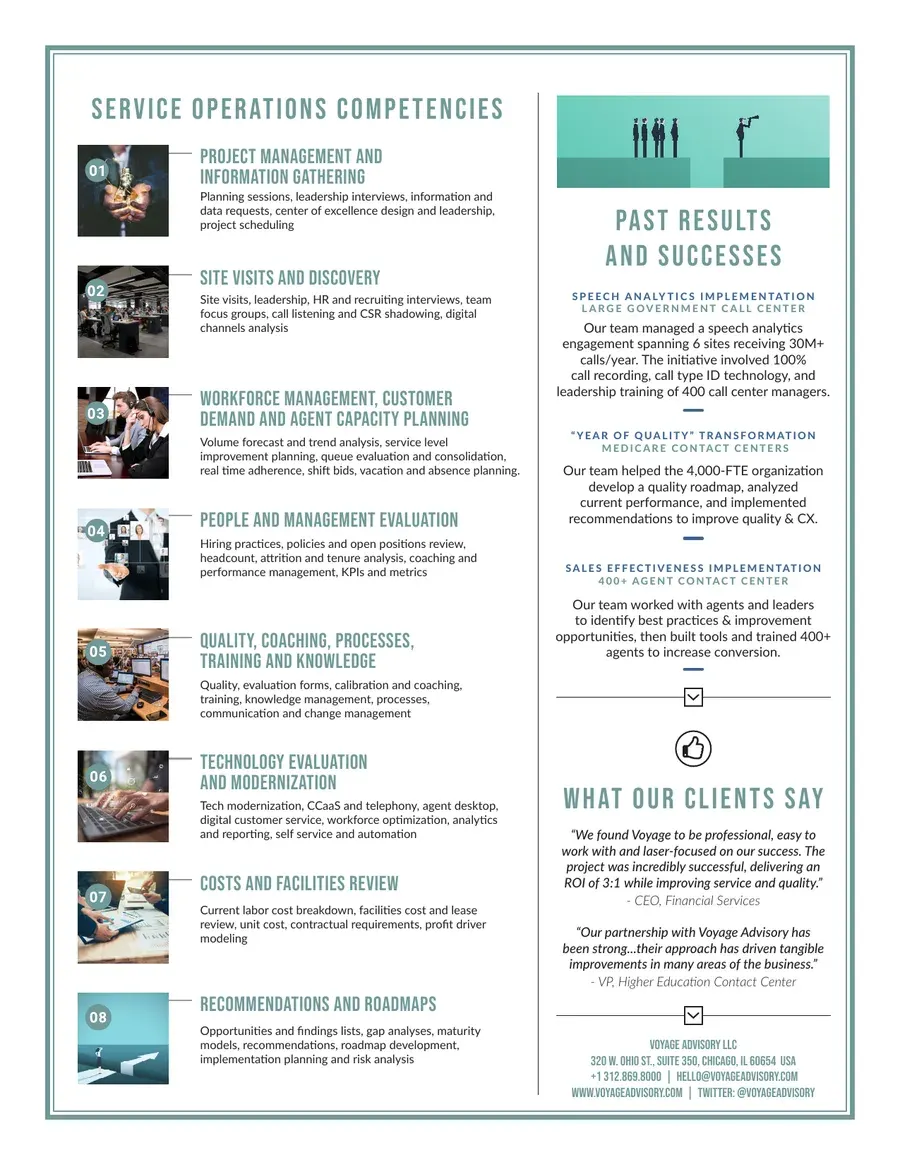
The eight areas a Voyage service operations assessment covers, from workforce planning to telephony and unit cost, with three engagements it has run: 30M calls a year across six sites, a 4,000-FTE quality transformation, and a 400-agent sales effectiveness build.
Enrollment advisors at an education provider needed a repeatable way to guide students through admissions – finding the best practices, and training to them.
The Paycheck Protection Program pushed $349 billion out in months and buried lenders in back-office work. How to prepare for volume nobody forecast.
An education services provider needed its knowledge management to work, not just exist. Rebuilding the practices around it, then the system itself.
Contact Center and Operational Assessment: Suicide Hotline for a Healthcare Provider. An understaffed suicide hotline with 30-plus work types, rising attrition and no quality program. Fixing staffing, scheduling, technology and role clarity.
Elevating service, driving performance and putting technology to work – the three things we help leaders turn from priorities into results.
Rethinking and Retooling the Coaching Process. An education services client had coaching that varied coach by coach. Building a standardized, measurable mentorship model that holds up at scale.
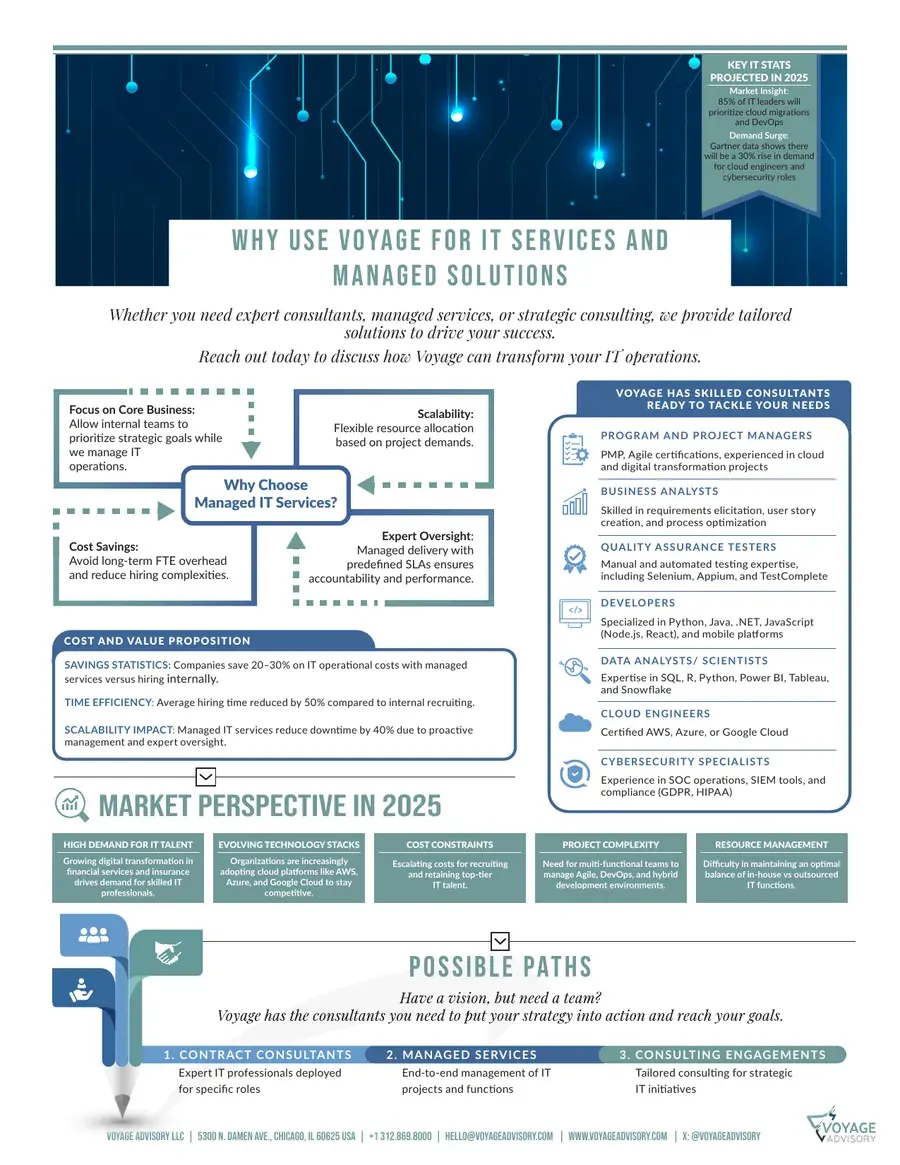
Managed IT services save 20 to 30 percent against internal hiring and cut hiring time by half. The roles Voyage places, the three engagement models, and where each one fits.
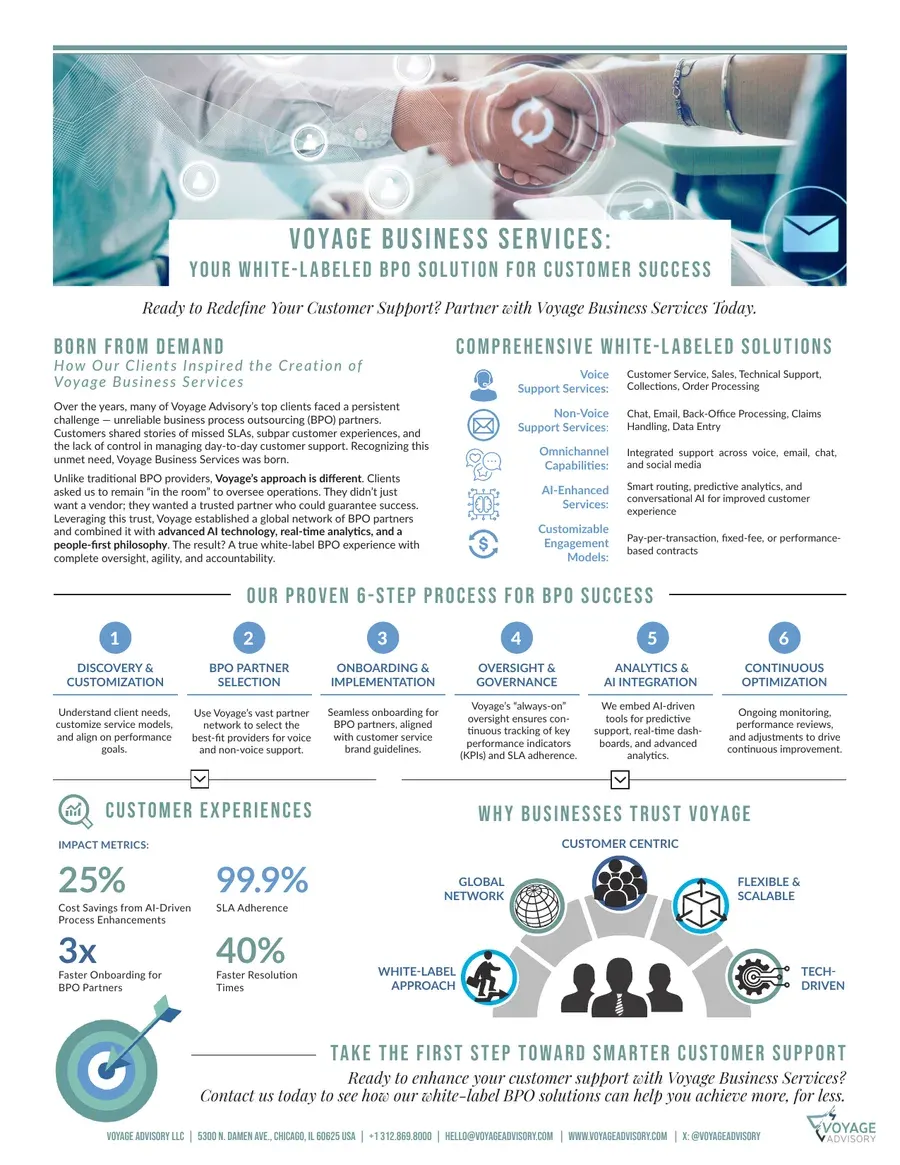
Voyage Business Services exists because clients kept asking for the same thing: a BPO arrangement where somebody who answers to them stays in the room. The six-step model, the service scope, and what it has delivered.
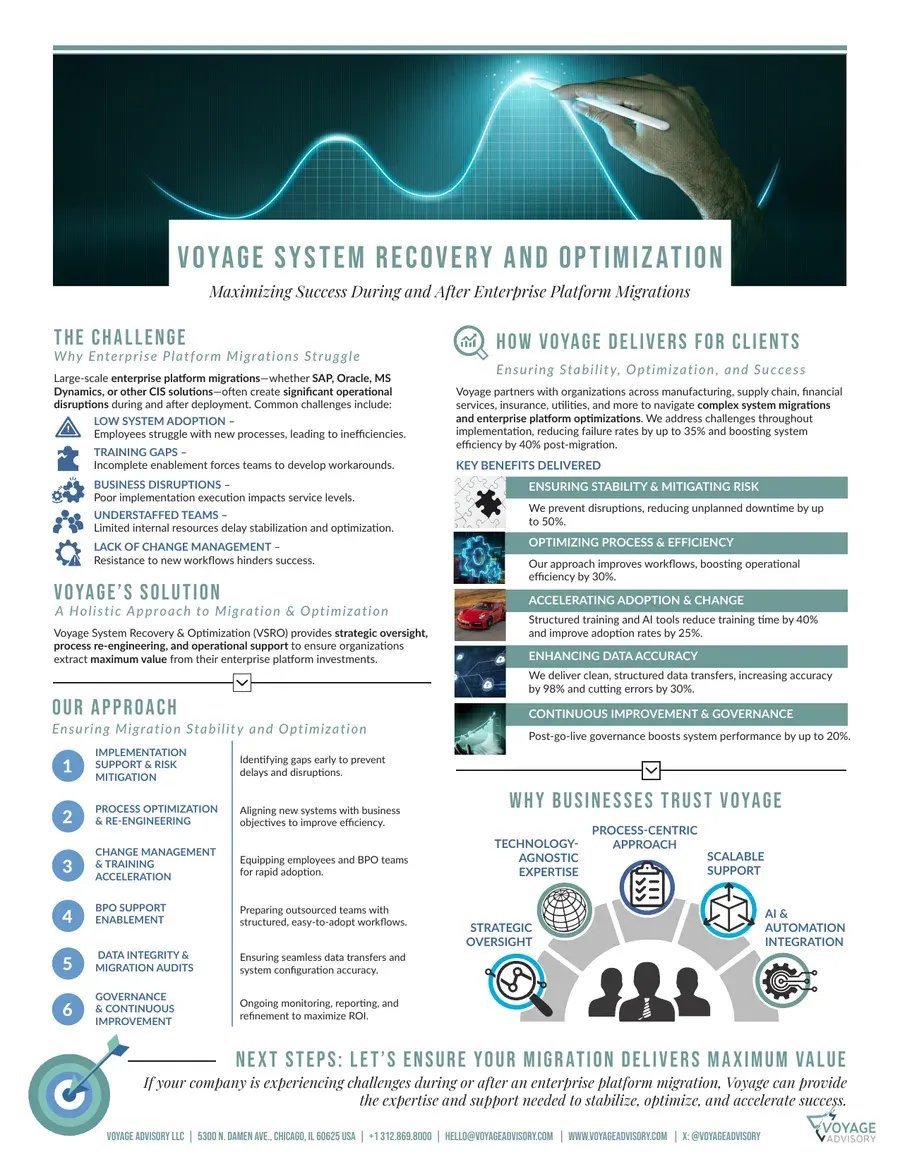
SAP, Oracle, Dynamics and CIS migrations fail in predictable ways: low adoption, training gaps, thin staffing and no change management. A six-part recovery approach, and what it has recovered.
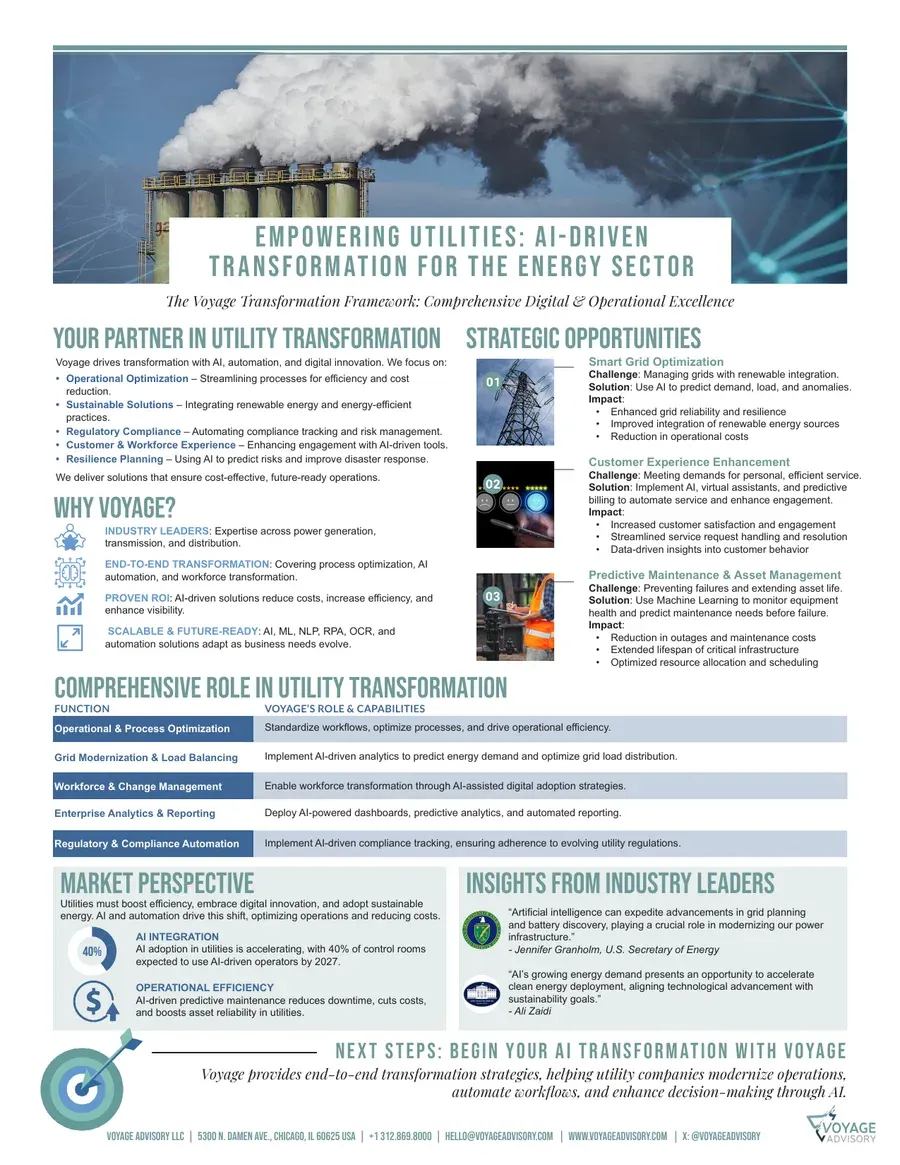
Where AI earns its place in a utility: smart grid optimization, customer experience, and predictive maintenance. The three opportunities, what each one changes, and the role Voyage plays across five functions.
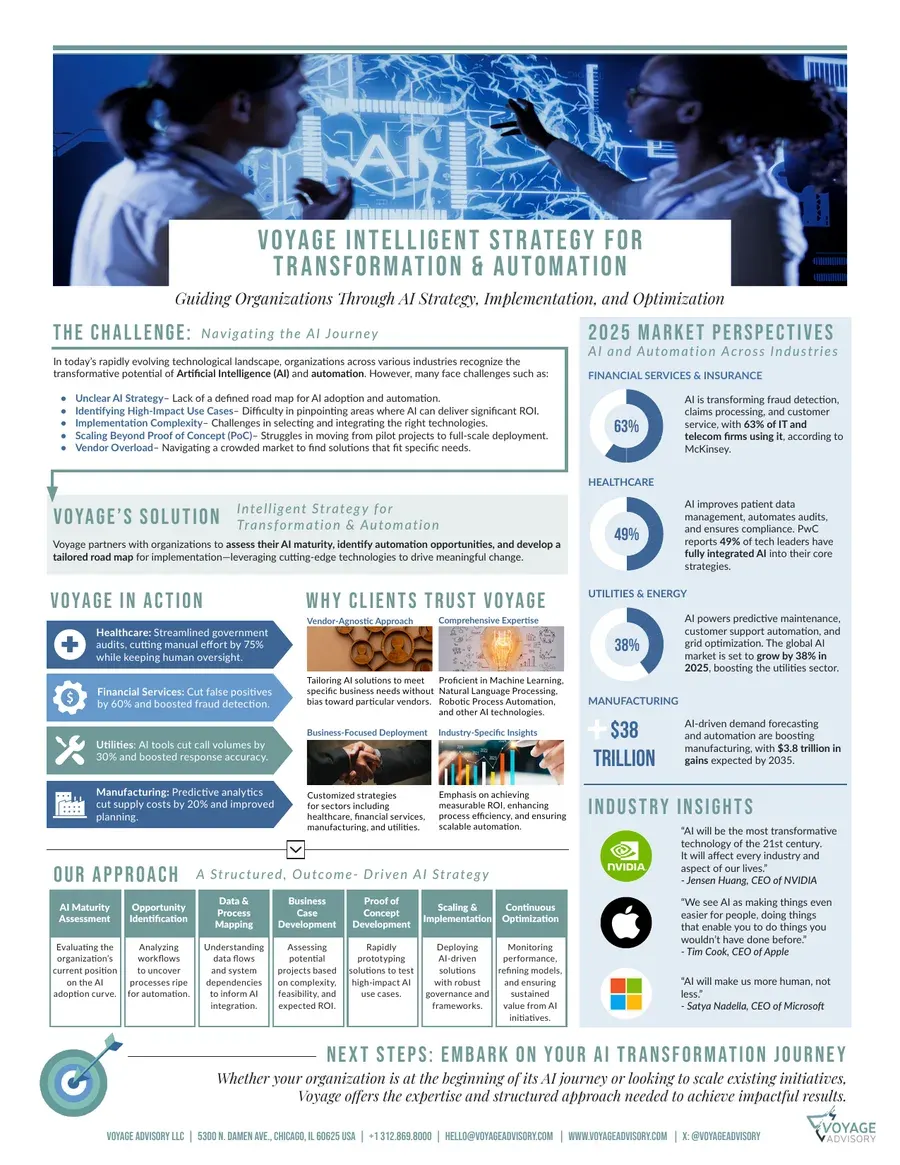
Most organizations do not have an AI problem, they have a sequencing problem. A seven-step path from maturity assessment to scaled deployment, with what it has produced in healthcare, financial services, utilities and manufacturing.
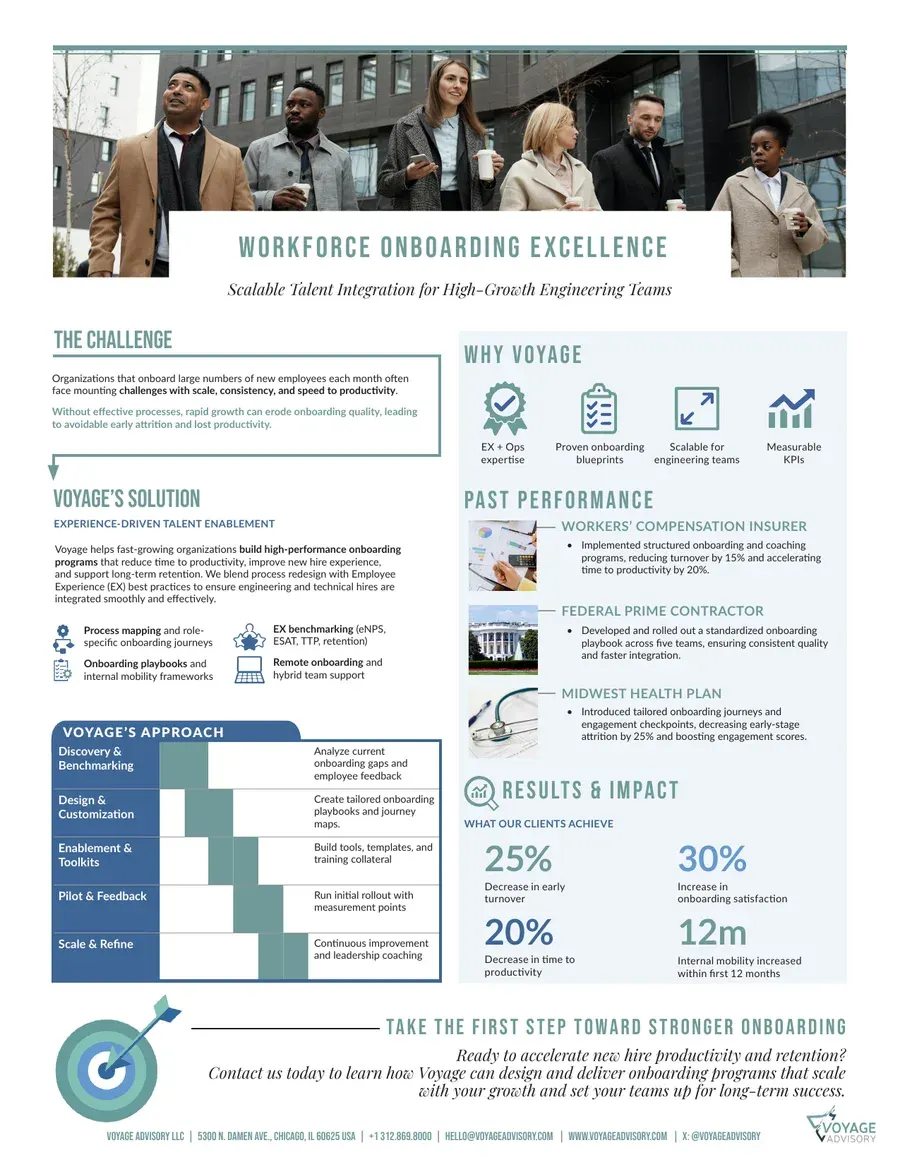
Organizations onboarding at volume lose quality first and people second. A six-step onboarding program that cut early turnover 25 percent, raised onboarding satisfaction 30 percent, and shortened time to productivity by 20 percent.
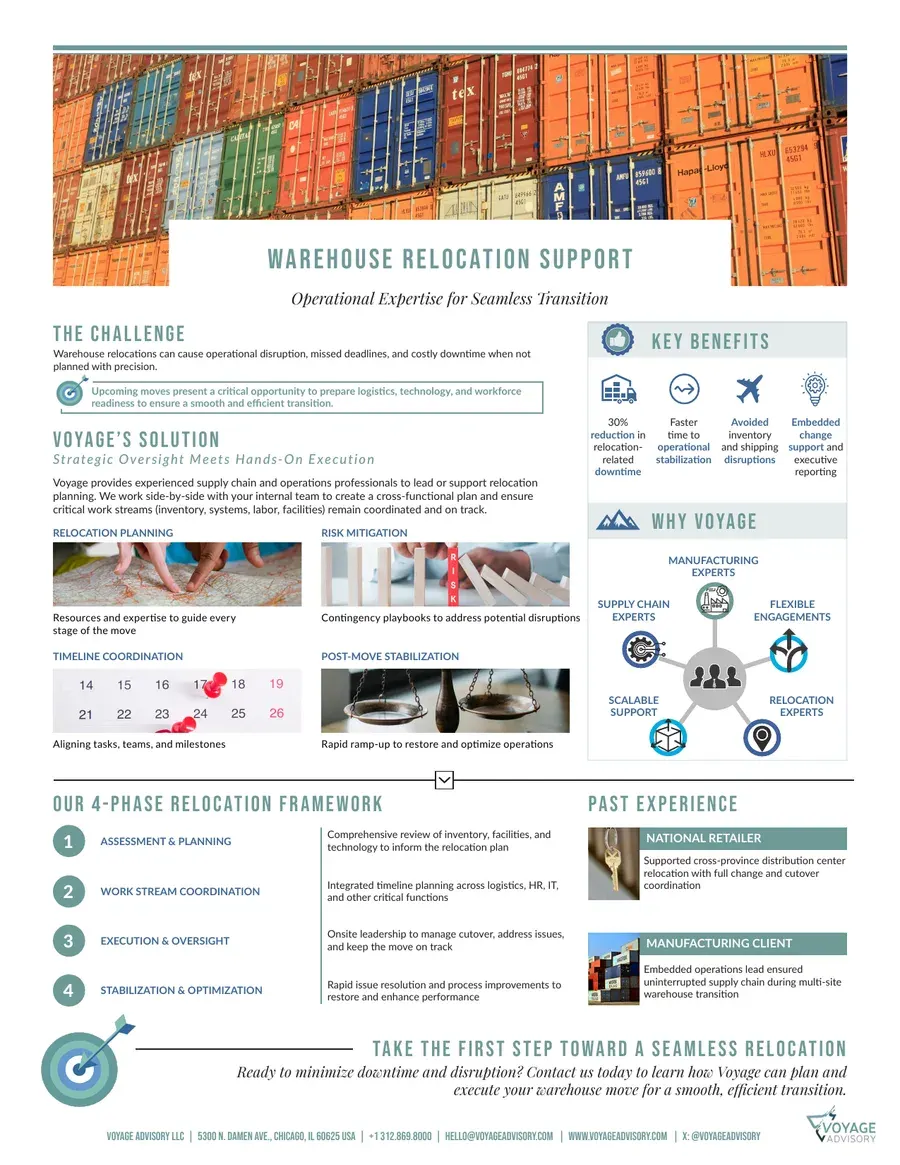
A warehouse move is a supply chain event with a deadline. A four-phase framework covering inventory, systems, labour and facilities, and a 30 percent reduction in relocation-related downtime.
Directors, VPs and CEOs steering large organizations in utilities, financial services, government and supply chain. Who we work with, and on what.
A short clip on driving performance: what it takes to get past outdated processes and the hidden inefficiencies that leave value on the table.
Six qualities leaders tell us set the firm apart, starting with fluency in the details rather than surface-level strategy.
Big firms, smaller firms, technology vendors, internal teams or waiting – an honest look at what each option costs a leader facing high-stakes change.
One of our engagement models: end-to-end support from a clear statement of work through a proven methodology to the team that delivers it.
Operating model, service experience and transformation discipline across P&C, workers compensation, life and annuities, specialty and health.
The last question in the series, after who our clients are and why they choose us: what actually happens when you decide to start.
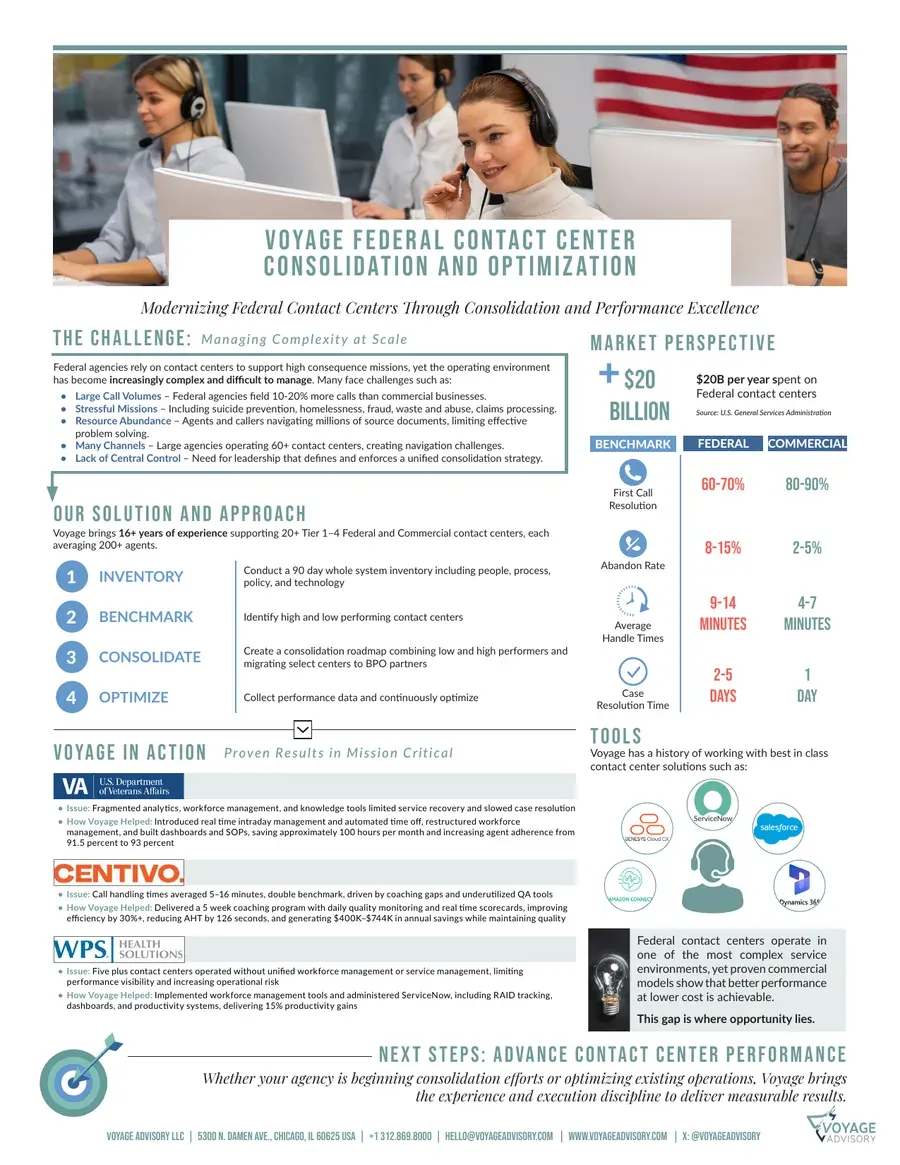
Federal agencies spend $20B a year on contact centers, field 10-20% more calls than commercial ones, and resolve 60-70% on first contact against 80-90%.
How a regional utility met a 200% rise in aged receivables with automation and a redesigned organization, turning a collections crisis into a rebuild.