

IT services and managed solutions
Date Published
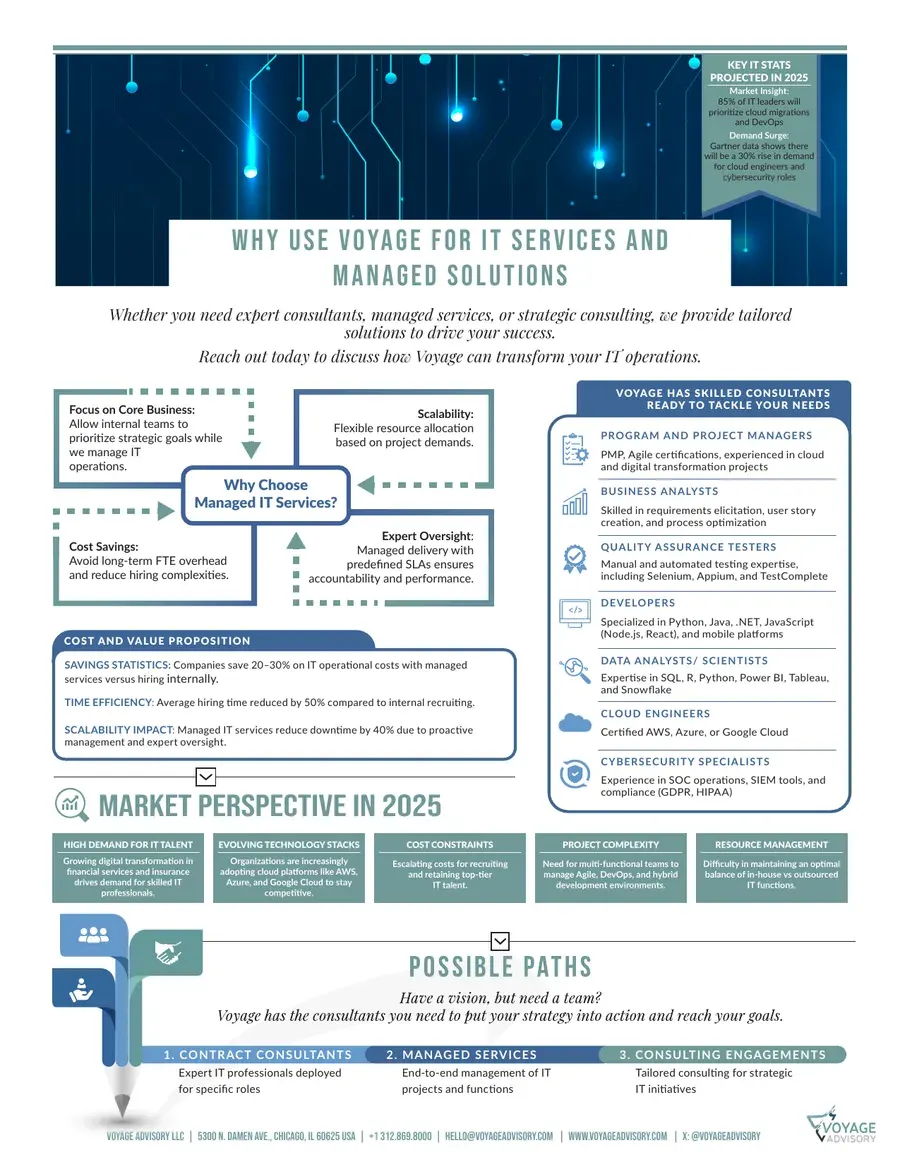
The pressures are familiar: demand for skilled IT people driven by digital transformation in financial services and insurance, technology stacks that keep moving toward AWS, Azure and Google Cloud, escalating cost to recruit and retain, projects that need multi-functional teams across agile, DevOps and hybrid environments, and no settled answer on what should be in-house.
The case for managed services
Beyond the numbers, the argument is focus and flexibility: internal teams get to prioritize strategic goals, resourcing moves with project demand rather than with headcount plans, and delivery runs against defined service levels that make accountability real.
Savings against hiring internally: 20-30%
Reduction in average hiring time: 50%
Reduction in downtime from proactive management: 40%
The people
Program and project managers holding PMP and agile certifications, experienced in cloud and digital transformation.
Business analysts skilled in requirements elicitation, user story creation and process optimization.
Quality assurance testers working manually and with Selenium, Appium and TestComplete.
Developers specialized in Python, Java, .NET, JavaScript and mobile platforms.
Data analysts and scientists working in SQL, R, Python, Power BI, Tableau and Snowflake.
Cloud engineers certified on AWS, Azure or Google Cloud.
Cybersecurity specialists with security operations center and SIEM experience, and compliance background across GDPR and HIPAA.
Three models
Contract consultants, for expert professionals deployed into specific roles. Managed services, for end to end management of an IT project or function. Consulting engagements, for strategic initiatives that need advice as well as hands.