
Manufacturing optimization
Date Published
Fast and sustainable results in a plant come from production optimization, process excellence and leaders who are equipped to hold the gains. The work runs across six areas at once, because throughput lost in one is not recoverable in another.
The six workstreams
System for managing. Plan against actual variance analysis, safety, cost, quality and service indicators, and decision-making that runs on the data rather than beside it.
Process design. Material handling, plant layout, automation and conveyance.
Talent management. Retention and attrition, reliance on temporary staff, training and skills.
Safety. Culture, actions and metrics, and a measurable reduction in accidents and insurance claims.
Analytics. Assess current reporting capability, decide how to organize it, and build the dashboards.
Supply chain and procurement. Review cost of goods and logistics, develop the metrics, and get visibility into procurement practice.
How the engagement runs
Start quickly, request the data that later phases will need, and understand what leadership is actually trying to achieve.
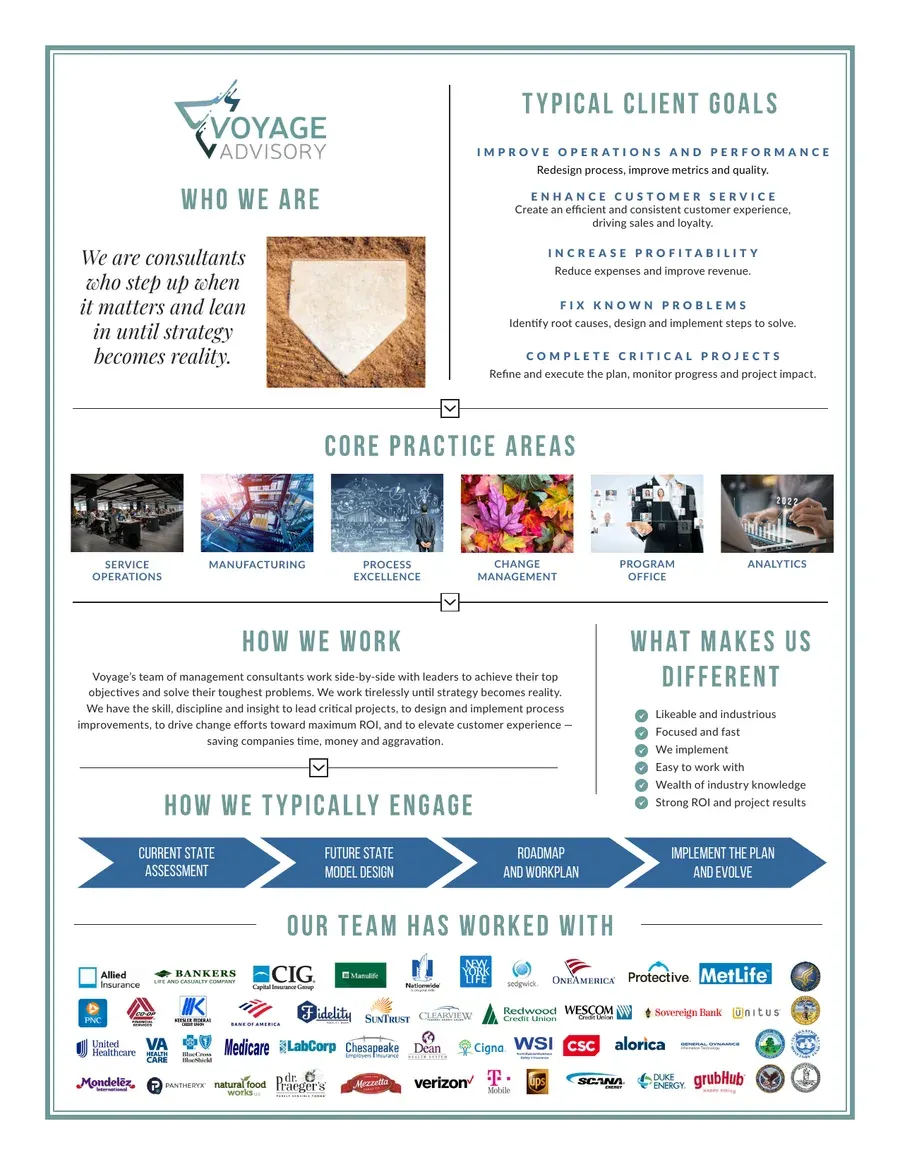
Identify and evaluate the activities being performed using an activity-based method, with observational analysis to set work durations and standards.
Design and implement a system of behaviors and management tools, supported by an operating structure, then use that system with the client team to drive the result.
Rethink how the work is done to improve throughput and lower cost, define the metrics the client will run on afterwards, and build the dashboards for them.
Transition each workstream to a center of excellence on completion, which is what keeps the result after the engagement ends.