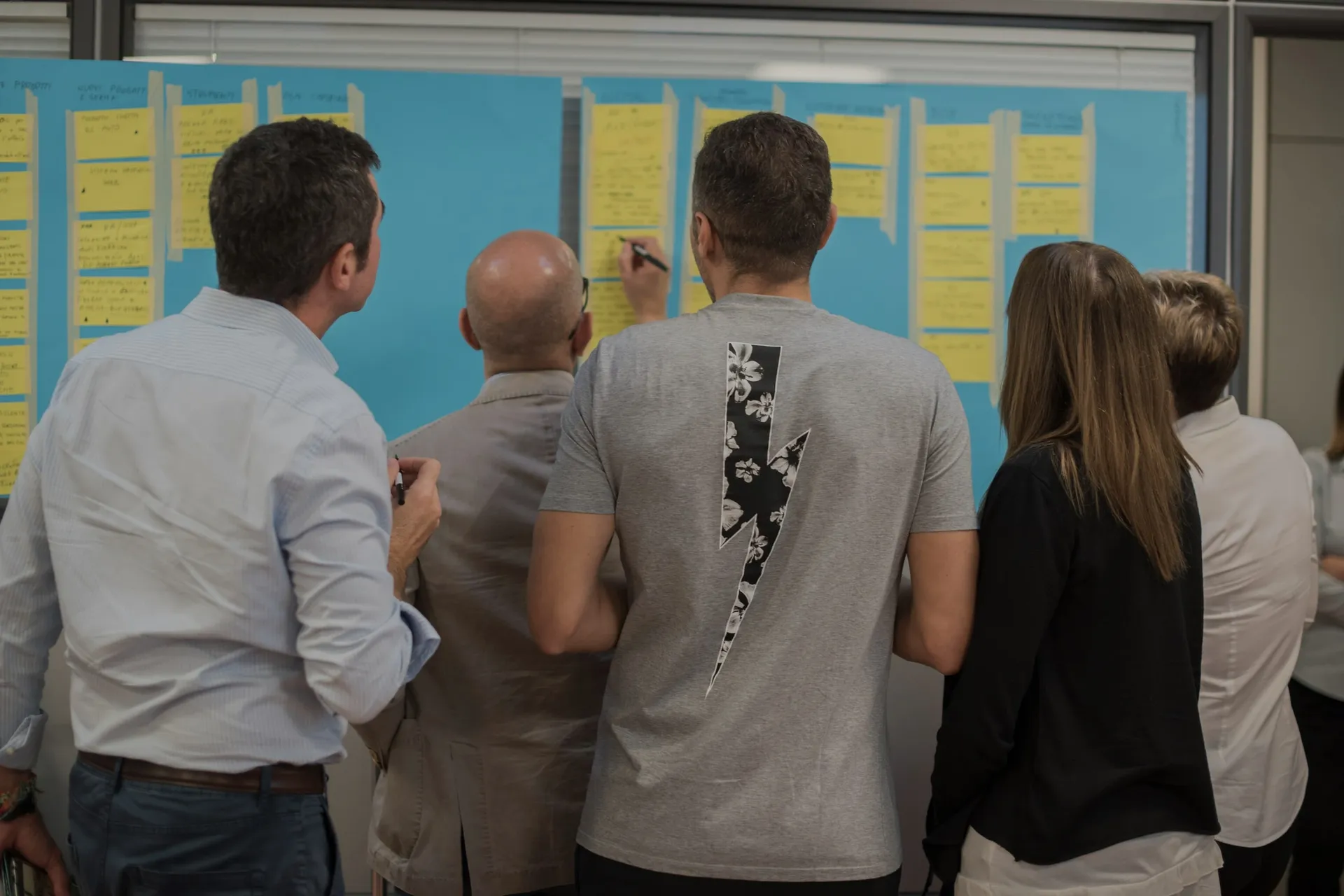

See It, Own It, Then Fix It
Two of the four layers of scaffolding: how to spot a problem early, and how to make sure someone owns fixing it. Where AI helps, and where it does not.
Real work. Practical lessons. Measurable results. Client results, perspectives from our work, and resources that go deeper.
Featured
Two of the four layers of scaffolding: how to spot a problem early, and how to make sure someone owns fixing it. Where AI helps, and where it does not.
Everything we have published, newest first.
The Paycheck Protection Program pushed $349 billion out in months and buried lenders in back-office work. How to prepare for volume nobody forecast.
What queueing theory says actually drives long waits – volume, handle time and staffing – and how to hold service standards when demand is uncertain.
Enrollment advisors at an education provider needed a repeatable way to guide students through admissions – finding the best practices, and training to them.
Starbucks stars and airline status work on you every day. How to use the same pull on service quality: named behaviors, balanced metrics, real rewards.
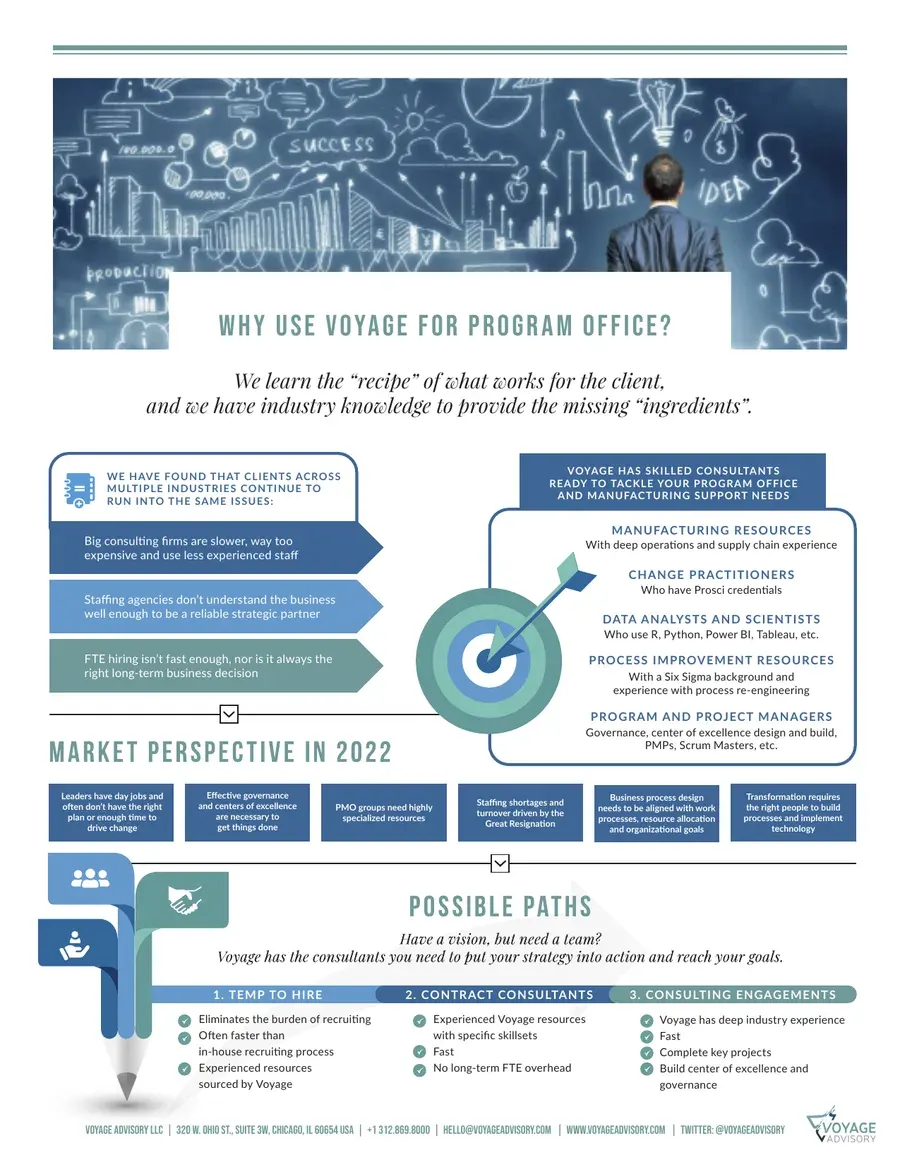
Why the usual three options fail, and what a program office actually needs: change practitioners with Prosci credentials, data scientists, Six Sigma process people, and program managers who have run a center of excellence before.
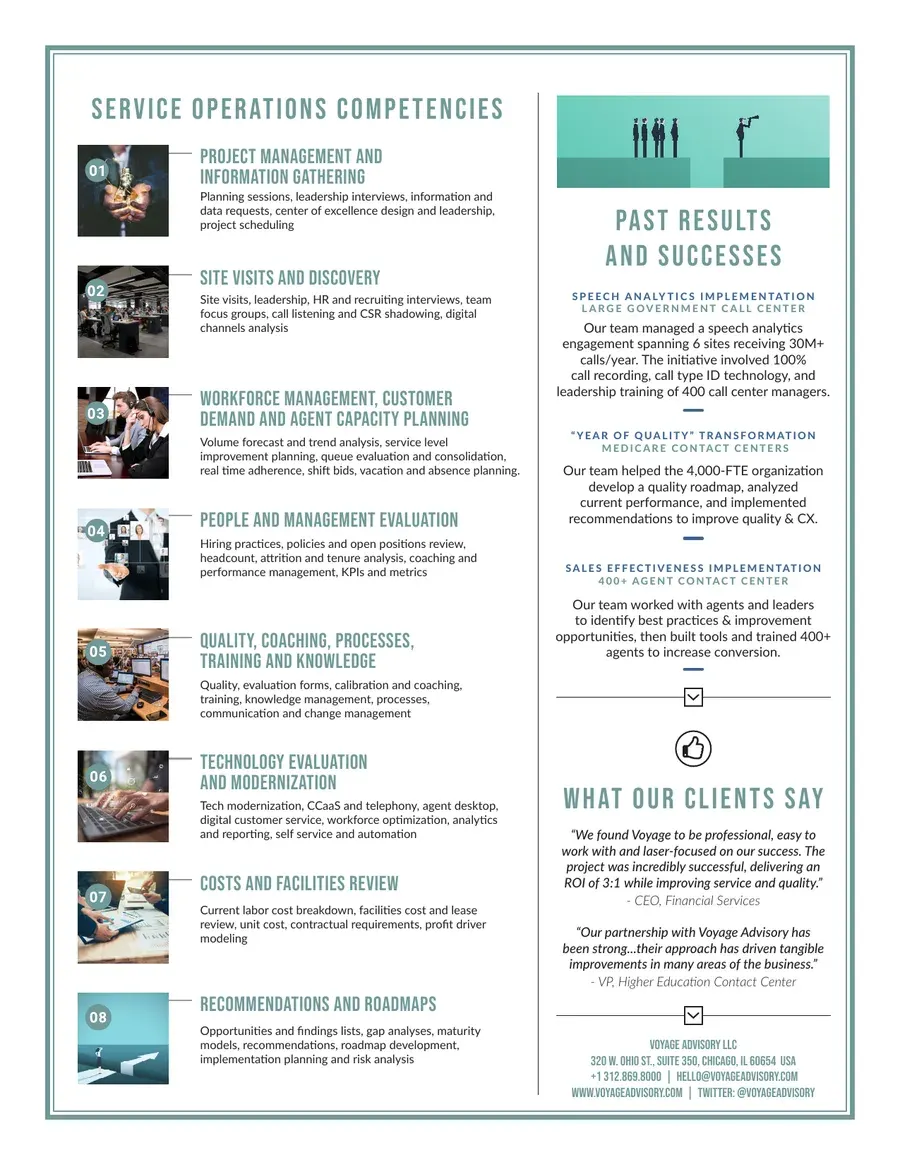
The eight areas a Voyage service operations assessment covers, from workforce planning to telephony and unit cost, with three engagements it has run: 30M calls a year across six sites, a 4,000-FTE quality transformation, and a 400-agent sales effectiveness build.
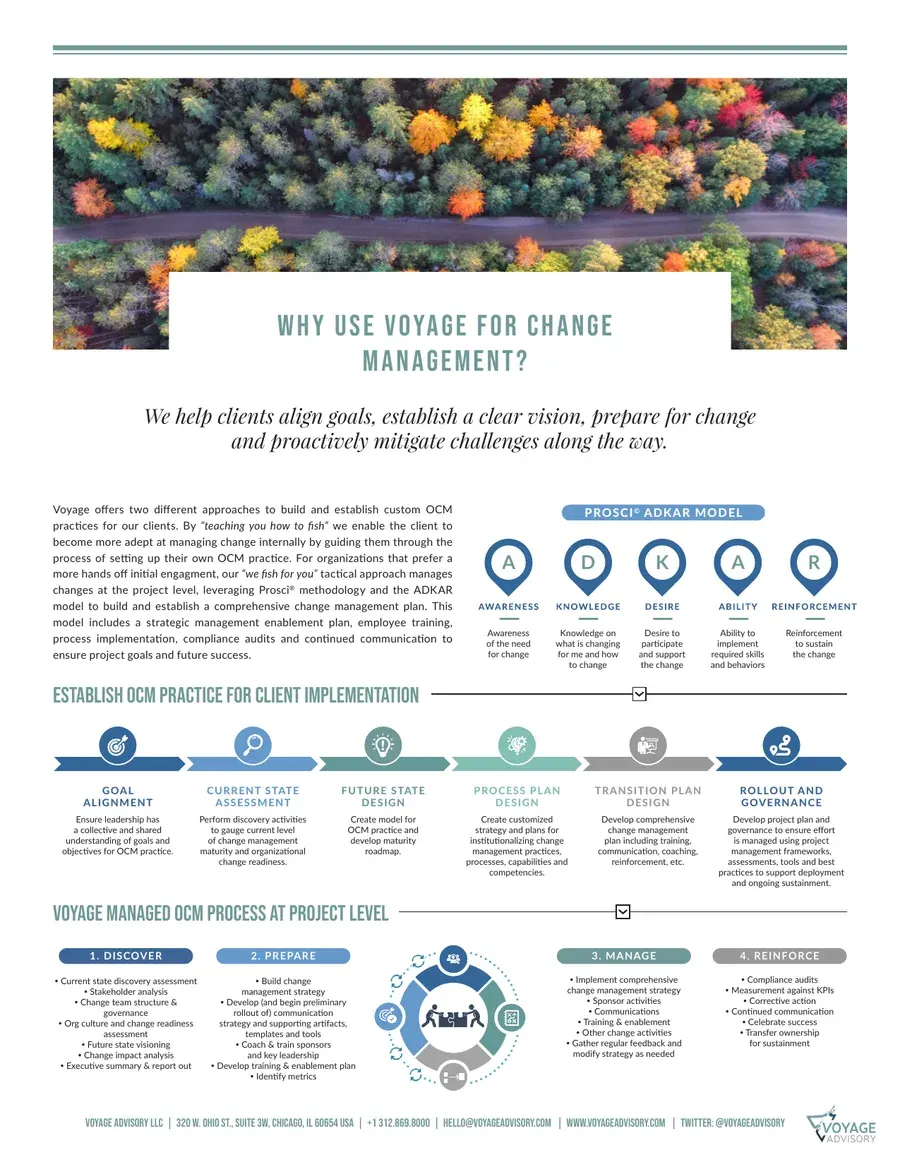
Two ways to run organizational change management, on Prosci and the ADKAR model: stand up your own practice, or have Voyage manage change at the project level.
Six workstreams for a plant that needs throughput rather than a strategy deck: the system for managing, process design, talent, safety, analytics, and supply chain, handed to a center of excellence at the end.